A Windy Afternoon Indoors, Without Buying a Project
A windy afternoon indoors can become a calm, no-cost ritual: sort a small drawer of coastal mementos, display one, and preserve its story.
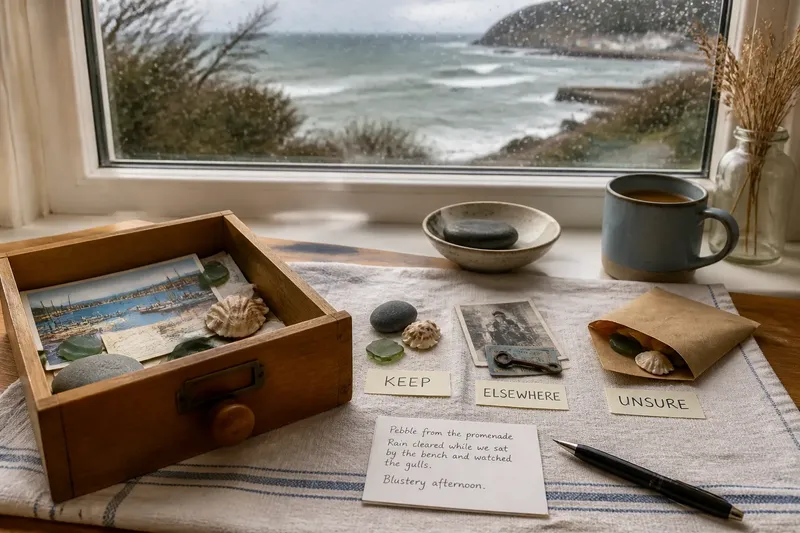
A gust rattles the letterbox and sends rain slantwise across the window. A windy afternoon indoors can still feel connected to the coast: choose one small drawer of mementos, give its contents a gentle sort, and let a single object tell its story for a while.
This is not a call to turn a quiet day into a craft project. You need only a clear patch of table, a soft cloth, paper and a pen. The point is to make a little room for looking, remembering and putting things away with care.
What makes a good drawer to sort on a blustery afternoon?
Choose a drawer that already holds a manageable cluster of coastal things, rather than emptying a cupboard or tackling the whole house. It might contain a smooth pebble, a shell picked up on a family walk, a folded harbour leaflet, a postcard or a small piece of sea glass. The drawer should feel like a contained pocket of memory, not a storage problem that needs solving.
Before you begin, clear a table or sturdy tray and put down a clean tea towel. Keep a small envelope or box nearby for anything that needs a different home. If the drawer contains damp, brittle or sharp objects, leave those alone for now; this is a gentle sorting session, not a restoration job.
How do you sort coastal mementos without making a bigger mess?
Take out only the items that fit comfortably on your prepared surface. Wipe the empty drawer with a dry cloth, then look at each object one at a time. Make three simple groups: things you still want to keep, things that belong elsewhere, and things you are unsure about.
That third group matters. You do not need to decide the future of every object on a blustery afternoon. Put uncertain pieces together in a small envelope and return them to the drawer, so indecision does not spread across the table.
For shells or pebbles, remove loose dust with a soft, dry brush or cloth. Keep paper items flat and separate from objects that might snag or press into them. Avoid washing, polishing or gluing anything unless you know what it is made of and how it should be handled. Labels or maker instructions take precedence where they apply.
As you sort, ask a useful question: does this item hold a memory, help me remember a place, or simply feel pleasant to see? There is no need for every object to pass the same test. A plain stone can matter because of the walk that brought it home, while a pretty shell may be easy to let go of if it has no particular place in your life.
Which single object should you put on display?
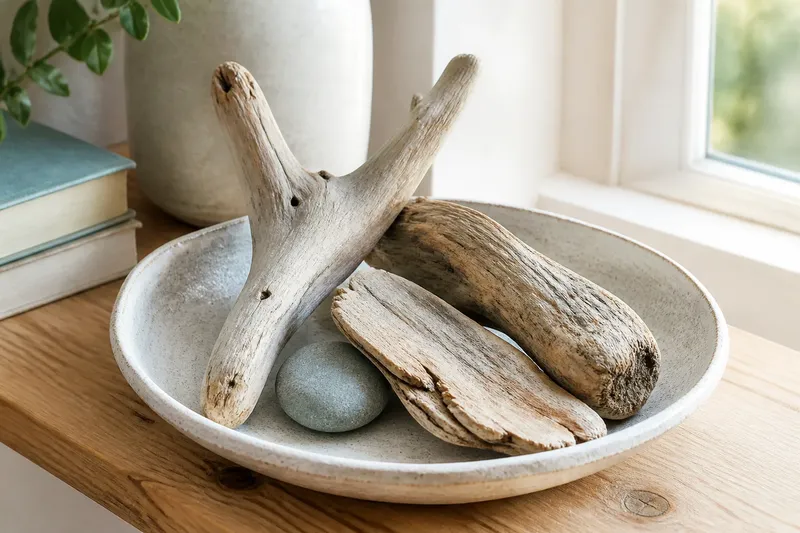
Choose the item that can carry a small story without needing a special stand or a newly bought frame. A postcard can lean against a book; a pebble can sit in a shallow dish; a shell can rest on a windowsill away from a draughty edge. Pick a spot where the object will be easy to see and easy to move when you dust or open a window.
Think of the drawer like a small bookshelf: one well-chosen item can invite a memory, while a crowded display makes each thing harder to notice. The aim is not to create a styled corner. It is to give one memento a temporary place in everyday life, then return it when you are ready.
Say you find a smooth pebble from an invented family walk along a local promenade. You remember stopping beside a bench while the rain cleared, so you choose the pebble for the windowsill and write that moment on a paper slip. The observable result is simple: the pebble is visible, and its particular story is not left to memory alone.
How can you record a memento’s story before putting it away?
Write a short note in ordinary language. Include what the object is, where it came from if you know, and one detail you can picture: the weather, the sound of gulls, someone’s company or what you were doing just before you found it. Keep to what you remember, and mark a detail as uncertain rather than filling a gap with a guess.
A scrap of paper tucked beside the object is enough. If you prefer a digital note, use a file or app you already keep, and give it a clear name such as “Pebble from the promenade”. You can add a photograph, but it is not essential; a sentence that makes sense to you is more useful than a polished record you never finish.
Imagine you have a harbour postcard but cannot recall the year it arrived. You write that it came from a friend after a windy walk, then note the picture on the front and the words you do remember. The note preserves the part you know without turning a hazy date into a false certainty.
What should you do with the mementos you are not displaying?
Put the keepers back in the drawer only after they are dry and free of loose grit. Lay paper flat, keep heavier pieces from pressing on delicate items, and leave enough space to retrieve things without scraping them together. If an object belongs with a photograph, map or letter stored elsewhere, make a simple note of its new home.
For items you no longer want, choose a considered next step rather than leaving them in a heap. A clean postcard might be offered to a relative who shares the memory; a shell that was picked up lawfully could be returned to a suitable natural setting only if that is appropriate locally. Otherwise, let it go through ordinary household disposal. Do not put collected objects back on a beach simply to clear the drawer, particularly where local rules or wildlife protection may apply.
If several objects seem to tell the same story, keep the one that brings the memory back most clearly and record the rest briefly before parting with them. This is not a test of how little you can own. It is a way to make the things you choose to keep easier to find and understand.
How long should a small memento sort take?
Stop when the table is clear enough to use again and the selected object has a place. The afternoon does not need a timetable, but deciding in advance to work only with one drawer helps keep the task light. If the weather shifts or you lose interest, return the unsorted group to its envelope and finish another day.
You can also let the ritual end with an ordinary comfort: make tea, listen to the wind from indoors or look through the note you have just written. The useful part is the pause, not the amount of sorting completed. On another blustery afternoon, a new object may take its turn on the windowsill, while today’s chosen memento returns to its drawer with its story beside it.
Can you keep coastal mementos in a drawer?
Yes, a dry, orderly drawer is a sensible home for many small keepsakes. Separate delicate paper from hard objects, and avoid putting away anything damp or gritty.
What if you do not remember where an object came from?
Record what you do remember and leave the rest open. A description of its colour, texture or the person who gave it to you can be meaningful without a precise place or date.
Do you need to display more than one item?
No. One chosen object keeps the session manageable and gives that memento room to be noticed. The rest can stay safely stored until another day.
What is a good way to preserve a coastal memory?
Write a short note in your own words and keep it with the object or in a clearly named digital note. Include a detail that brings the moment back, and distinguish memory from guesswork.
A windy afternoon indoors need not produce a new purchase, a finished craft or a perfectly organised home. With coastal mementos, a small drawer, one visible object and a brief story are enough to make a familiar corner feel more personal. Keep the note somewhere you will find it when you next open the drawer, and let the rest of the day remain pleasantly unplanned.