The Beachcombing Treasure Myth: Leave Room for Looking
Beachcombing need not end with a valuable find. Choose a way to notice the shore that suits your time, attention and what the tide has left.
You reach the pebbles with a pocket free and the tide slipping away, but nothing looks worth taking home. That can still be a good beachcombing walk: the shore offers plenty to notice without producing a treasure.
The idea that a worthwhile outing must end with a shell, piece of glass or striking stone turns looking into a hunt with a pass-or-fail result. A gentler approach is to choose what kind of attention suits you today. You might observe, sketch or keep a brief list of details that change between visits. The best fit depends on your time, company and energy.
Choose observation when you want an easy walk
If you have a few minutes, are walking with someone who prefers to keep moving, or simply do not want to carry anything, make noticing the whole activity. Pick one feature: the edge of the water, the pattern of foam, or the line where wet sand becomes dry.
Watch how that feature shifts as you walk. A shallow stream may split around a pebble; a wave can erase the path it just made. You do not need to name every bird or identify every shell. Staying with one changing detail is enough to give the walk a centre.
This suits a casual visit because it needs no preparation and leaves your hands free. It also avoids the pressure to search every patch of shingle for something to keep. If you find yourself slowing down, follow the detail for a little longer; if you do not, carry on.
Choose a pocket sketch when shapes hold your attention
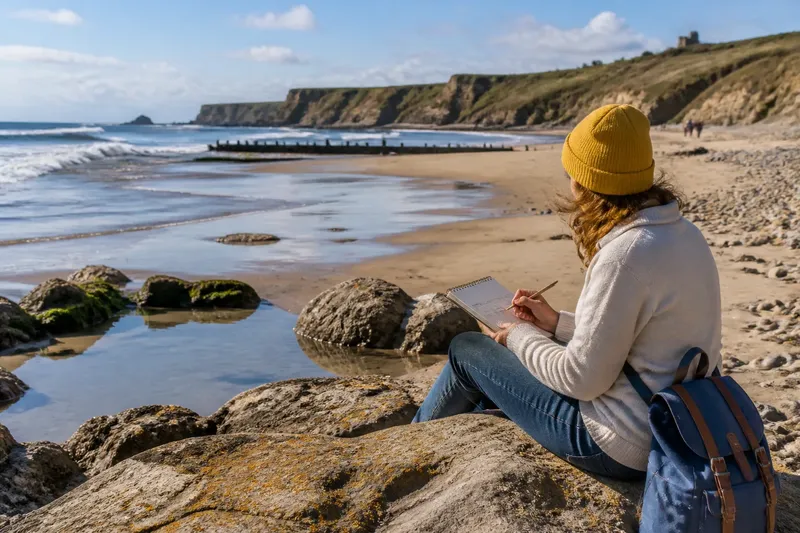
If you like drawing but have little time, sketch one simple outline rather than attempting a whole view. A pencil and a small notebook are plenty. Try the curve of a tidal pool, the angular edge of a groyne, or the silhouette of a distant headland.
A quick drawing is not a test of artistic skill. Look for the main shape, then add one feature that makes it distinct: a notch, a shadow or a break in the outline. The sketch can be rough enough to finish before the light changes. If drawing feels fussy, make a few marks that suggest the shape instead of filling the page.
This option fits a quieter visit when you want to pause in one place. It gives your eyes something specific to study, while the notebook stays small enough to tuck away. Keep it dry and secure, and choose a spot that does not obstruct other people using the shore.
Choose a changing-details list when you return often
If the same stretch of coast is part of your routine, a short list can make gradual changes easier to notice. Write down a handful of observations in plain language: a channel newly exposed by the tide, a line of wrack farther up the beach, or a familiar patch of sand that has narrowed.
Keep each note descriptive rather than trying to explain its cause. Tides, weather and seasonal conditions can all affect what is visible, and a single walk cannot tell you why something has changed. The value is in noticing, not diagnosing.
This suits regular walkers and anyone who enjoys small patterns over time. Use the back of a receipt, a phone note or a pocket notebook; the point is to make recording easy enough that you will actually do it. If keeping a record starts to feel like homework, drop the list and look around instead.
Choose a shared noticing game for a family walk
If you are with children or a companion who wants a reason to explore, take turns spotting things with a chosen quality: something curved, something that moves, or a mark left by water. The subject can be a bird, a shadow or a pattern in the sand; nobody needs to collect it.
Say you are walking with a child who is disappointed that the beach has no striking shells. Suggest a round of finding three different wave marks instead. You might both end up pointing out ripples, a damp line around a rock and foam caught in a shallow hollow. The expected result is a shared conversation and a closer look, not a particular discovery.
This approach fits a lively group because each person can contribute at their own pace. Keep the prompt open-ended, so it does not become another race to win. If a child would rather walk, let the game go; the shore does not need to become an activity sheet.
Let the shore set the limits on what you take
Looking does not mean you must never pick anything up, but keeping a find should be a considered choice rather than the measure of success. Leave living creatures, eggs and attached seaweed where they are, and avoid disturbing nests or turning over habitat for a better view. If you handle an object briefly, return it gently and close to where it was, without rearranging the shore.
Some beaches have local restrictions on collecting, and what is appropriate can depend on the place and the material. Follow posted signs and local guidance; if you are unsure about a natural object, leave it there. The same restraint helps preserve the scene for the next person, as well as for the wildlife that relies on it.
Which kind of beachcombing fits today?
What if I only have a short time?
Choose one detail to follow, such as the waterline or a patch of foam. It gives a brief walk a focus without requiring supplies or a souvenir.
What should I bring for sketching?
A pencil and small notebook are enough for a loose outline. If you do not want to carry them, observe a shape and remember one distinctive feature instead.
How can I make a beach walk interesting for children?
Offer a simple spotting prompt, such as finding something curved or something moved by the tide. Let children choose what counts, and keep the activity about noticing rather than collecting.
Is it still beachcombing if I bring nothing home?
Yes: beachcombing can mean paying close attention to what the shore holds, not removing an object from it. A useful find might be a changing pattern, a sketch or a detail you notice on your next visit.
Next time the beach seems empty, choose your kind of looking before you start to search. Beachcombing without a treasure hunt leaves room for whatever the tide has made visible—and for the quiet satisfaction of seeing it before it changes.